Engineering Design & Testing : Platform Gap Filler
At S.K. Polymer, our Platform Gap Filler (PGF) is engineered with safety, durability, and performance as core priorities. Designed to bridge the hazardous gap between train platforms and vehicles, the PGF undergoes rigorous engineering analysis and testing to ensure optimal performance under real-world conditions.
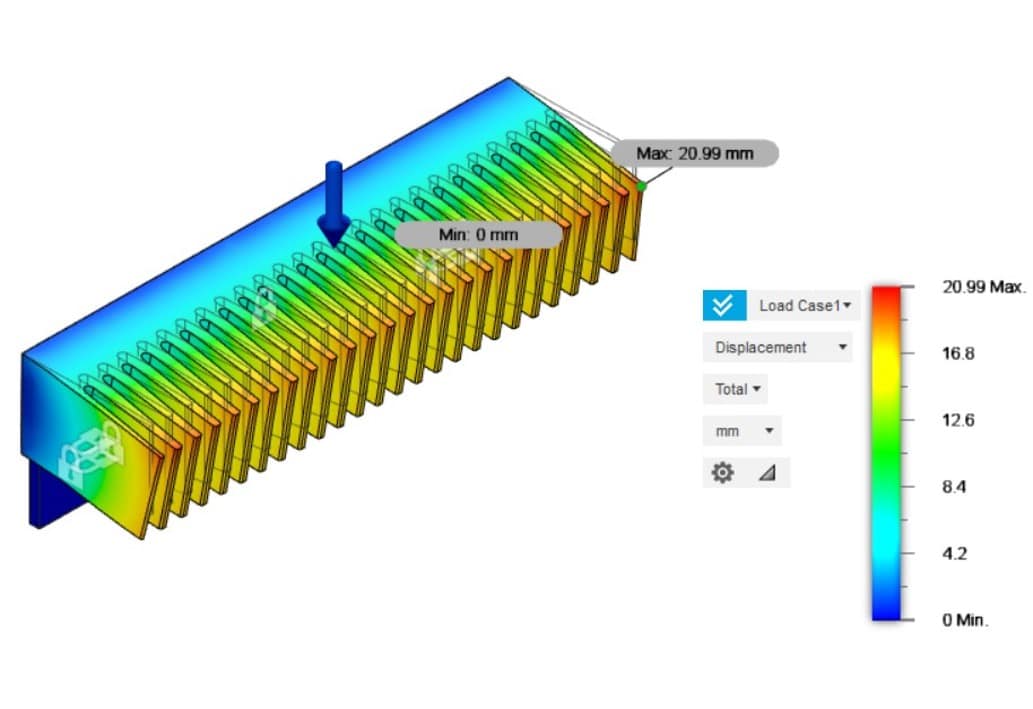
We apply Finite Element Analysis (FEA) in the design process to simulate and optimize the structural behavior of the gap filler under heavy loads. This advanced engineering method allows us to evaluate stress distribution, deformation, and long-term durability before production, ensuring the final design performs reliably when installed at busy transit stations.
S.K. Polymer: Thailand’s First Platform Gap Filler Manufacturer
S.K. Polymer is proud to be the first company in Thailand to develop the “Platform Gap Filler” (PGF) to enhance passenger safety. This innovative solution prevents accidents by filling the gap between trains and platforms, ensuring safer travel for people of all ages, including those with disabilities.
Our PGF has been successfully implemented in Thailand’s Airport Rail Link, as well as in leading transportation systems in the United States and Norway.
At S.K. Polymer, we are dedicated to pioneering safety innovations that make global transportation more accessible.
To validate design performance, our gap fillers are subjected to comprehensive Usability Tests, including load tests and fatigue tests. These evaluations confirm the products can withstand heavy weight and continuous use, with proven capacity to bear loads up to 200 kg/cm², supporting both foot traffic and wheelchair users with confidence.
FLEXIBLE DESIGN
Varieties of mounting sizes to suit platform configuration. The tooling can be customized for molding different widths of the gap fillers. The steel plate height can also be adjusted.